
Free Motion Quilting: Your Complete Guide
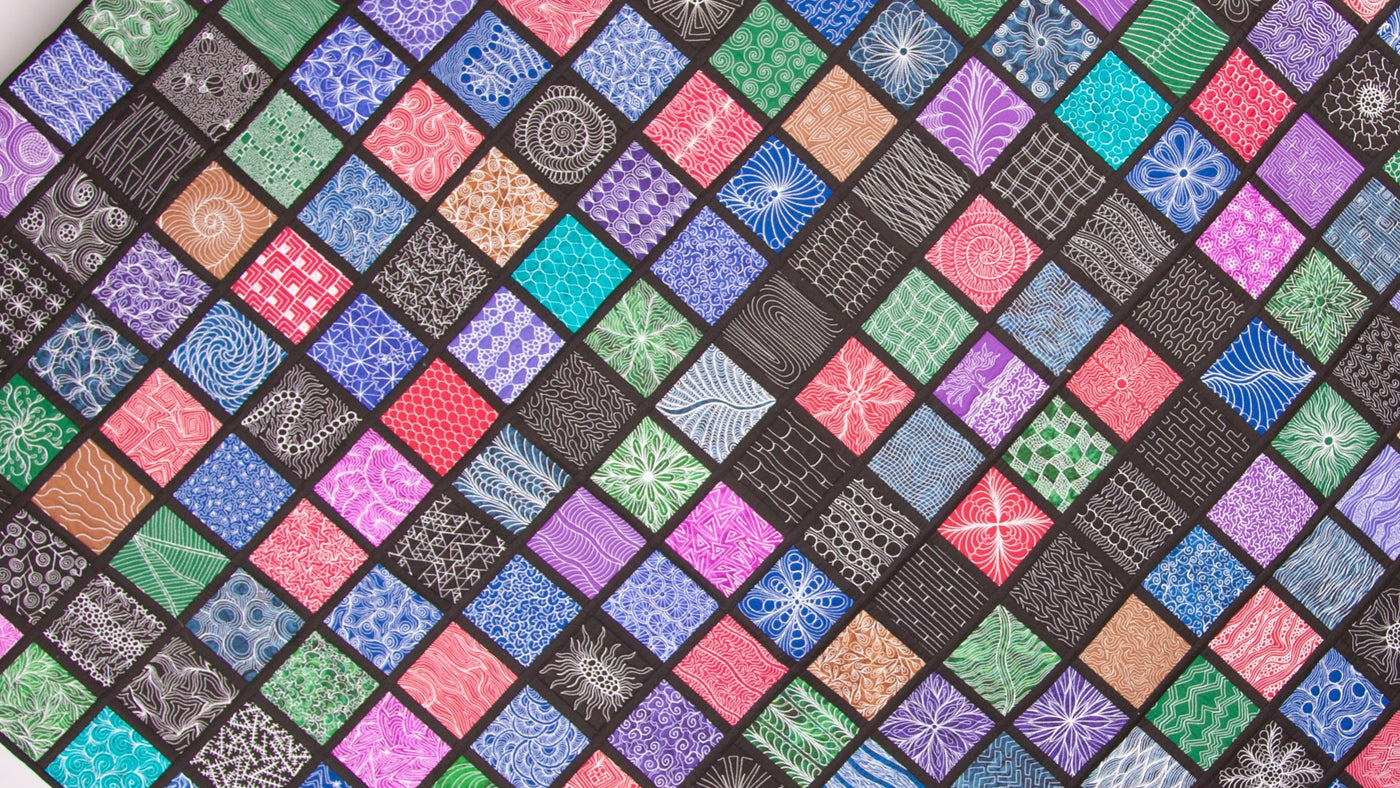
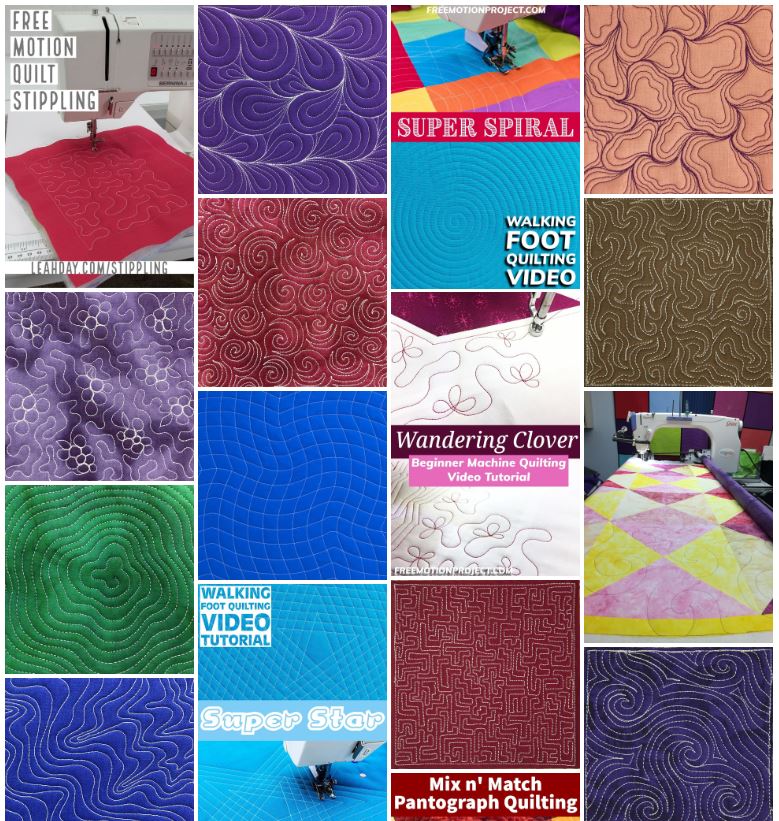
Welcome to the Free Motion Quilting Project! My name is Leah Day, and I started this journey in 2009 with an ambitious goal: create 365 new free motion quilting designs and share them online. You can still find all of the videos - just click any of the design images above to find a video and learn how to free motion quilt that design.
Click Here to find the 365 Free Motion Quilting Designs book if you're like me and love to have a print book to flip through. The photos in the book have been edited to show you the stitched outline of each design so you can see how I quilted the entire square:

What began as a personal creativity challenge has grown into a comprehensive resource that's helped thousands of quilters worldwide discover the joy of free motion quilting. Keep reading to learn much more about this style of machine quilting and how to get started.
Getting Started: Your First Steps to FMQ
Required Materials and Tools for Free Motion Quilting
To being free motion quilting you will need three things:
Sewing Machine - yes, you can begin free motion quilting with the sewing machine you are using right now. If you don't have a machine, Click Here to find affordable sewing machines I use and recommend.
Darning Foot - A darning foot is a special foot that allows you to move your quilt in all directions. Here is an inexpensive darning foot that will work with most smaller sewing machines, plus instructions on how to modify this foot to make it work even better.
A new alternative foot is a ruler foot, which allows you to do ruler quilting AND free motion quilting.
Practice Quilt Sandwiches - Yes, you will need a quilt sandwich composed of three layers: backing, batting, and quilt top in order to practice free motion quilting. Don't try to skip a layer to save on practice supplies - you have to quilt through actual quilts for free motion quilting to work.
Take Your First Free Motion Quilting Stitches
Your first free motion quilting stitches may feel a little scary. Here's a video to guide you through the first steps with lots of tips, tricks, and tools I use to make machine quilting easier:
Helpful Free Motion Quilting Tools
You'll see in the video above that I'm wearing gloves. When quilting on a sewing machine or a sit down long arm quilting machine, I always wear gloves to get a better grip of the quilt
To make the quilt easier to move, I use a Free Motion Glider, a slippery sheet designed to reduce friction between the back of the quilt and the machine bed. Make sure to tape down the corners of this tool as it's very thin and you can easily stitch it to the back of your quilt!
The thread you use for free motion quilting can make or break your quilting experience. I've been using Isacord polyester embroidery thread for machine quilting since 2009. Not only does it quilt beautifully, it rarely breaks and creates very little lint.
Click Here to find these three tools in the Machine Quilting Kit!
What's the best design to start with?
Honestly, you can begin with any design! The real secret is picking one design and quilting it over and over until you memorize the steps. Think of free motion quilting like writing your name in cursive – there are small rules that govern how everything connects together. Once you learn these rules, you can quilt beautiful designs without marking.

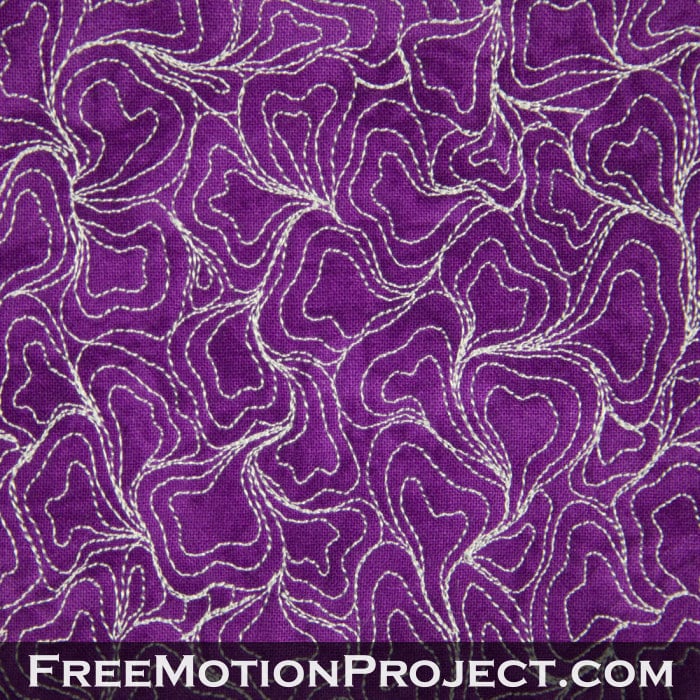
I recommend starting with Stippling – it's simple, popular, and follows one easy rule: quilt a wiggly line that doesn't cross itself. Many quilters think this "no crossing" rule applies to ALL free motion quilting, but that's absolutely not true! Most of my designs actually use travel stitching, where you stitch back over previous lines to reach new areas.
Understanding Your Sewing Machine
Free motion quilting uses your sewing machine in an unusual way. Instead of letting the feed dogs control fabric movement, you take complete control. Whether you drop your feed dogs or set your stitch length to 0, and suddenly YOU'RE responsible for moving the quilt and creating every stitch.
When free motion quilting, you are doing three things:
- Moving the quilt to create the design, typically from memory (that's free hand free motion quilting), but you can also follow a marked line too.
- Controlling the sewing machine's speed, typically with a foot pedal.
- Balancing the speed of the machine with the movement of your hands. If you slow down the machine, you'll need to slow down your hands too. This is a balancing ratio of speed and movement, and it's 100% feel, NOT a machine setting.
Get ready to make some ugly stitches! If you've been piecing quilt tops or sewing for years, FMQ is going to feel weird. Your stitches will fluctuate, your lines will wobble, and that's completely normal. Yes, making ugly stitches like this is a normal part of the learning curve for free motion quilting:

The good news? This technique lets you move your quilt in any direction and create any design you can dream of. Want to write "I love you to the moon" over a baby quilt? Free motion quilting is the way to do this!
How do you improve? Practice! When I started the Free Motion Quilting Project and challenged myself to create these new quilting designs, I wasn't that good at quilting either. Having the goal to quilt a design every day dramatically improved my skills in just a few months. Challenge yourself to quilt daily, and I promise you'll see improvement in less than a month.
It can also help to eliminate one thing you're doing from the list above. If you don't have a free motion quilting design memorized, try using these Paper Quilting Stencils as a guide. No, this isn't cheating - it's making this technique easier and more accessible for you to learn.
Essential Quilting Tools for FMQ on a Home Machine
Over the years, I've tested countless gadgets and gizmos for free motion quilting. Here are the only three tools I personally can't quilt on my home sewing without:
- Machingers Quilting Gloves – Wearing quilting gloves will give you a better grip on the quilt so you can better control where it's going. I love these gloves because they're lightweight and never make my hands sweat.
- Free Motion Glider – This Teflon-coated sheet reduces friction between your sewing machine and the quilt, making it easier to move your quilt in all directions.
-
Isacord Thread - This is 40 weight polyester embroidery thread. Yes, polyester. I've been using this thread since 2009, in all of my quilts including baby quilts and tablecloth quilts I wash regularly, and it works GREAT!
FMQ requires thread that's thin, strong, and able to take higher speeds and intensity. Cotton threads are simply too weak and / or too thick for the job.
Beyond Free Motion: Other Quilting Methods
After focusing exclusively on free motion quilting for over a decade, I began branching out with more machine quilting methods and machines. There is no one-size-fits-all in quilting! All quilting styles are fun to explore and can help us finish our quilts beautifully.
Walking Foot Quilting seemed slow and clunky when I first started, but it deserves a second chance! I ended up writing an entire book, Explore Walking Foot Quilting with Leah Day, and created 30 beginner-friendly designs. This technique is perfect for straight lines, gentle curves, and geometric patterns.
Ruler Quilting originated on longarm machines and quilting frames, but we can quilt with rulers on our home sewing machines too. You'll need a ruler foot, which is a type of darning foot with a high edge that allows you to safely quilt with rulers. By using the ruler or quilting template as a guide, you'll have more control over your designs while still moving the quilt freely. Click Here to find my quilting rulers, made by Grace Company.
Longarm Quilting has significantly changed the machine quilting world over the years. Here's a simple fact - quilting on a home machine is hard. It's hard on our body, it takes a lot of practice to master and many of my quilting students began switching to longarm machines around 2012.
I stuck stubbornly with my home machines for many years. And then my back began hurting - BAD. Years of sitting still, hunched over a sewing machine took a toll on my body and now I manage chronic back pain as a result.
The lesson: listen to your body and don't stubbornly stick to a method if there's an easier way. The price and size of longarm machines have become much more affordable in recent years.
In 2018, I became a dealer for The Grace Company and this has been an amazing experience!
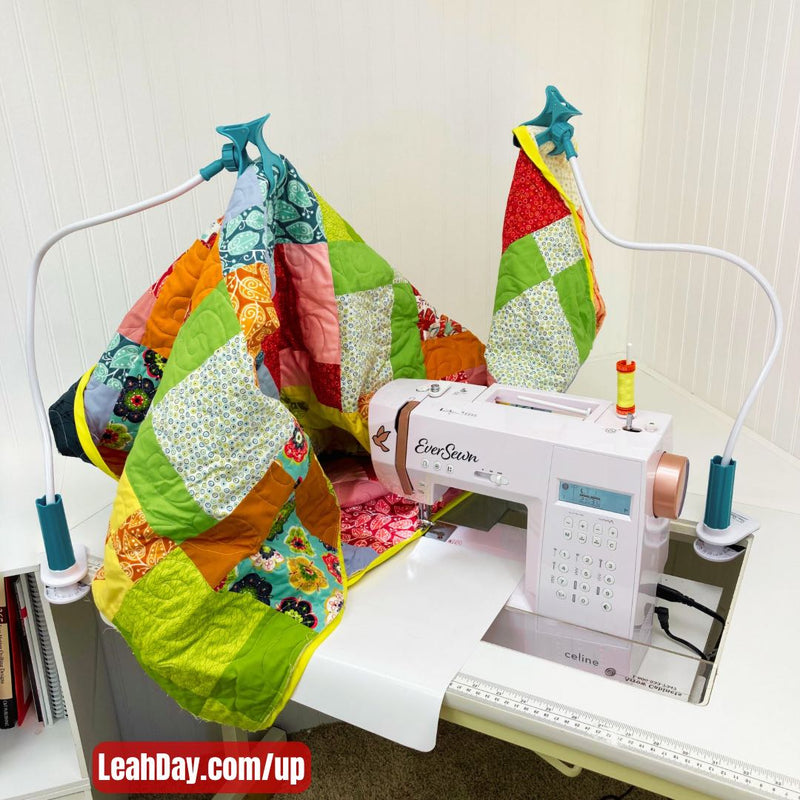
Grace Company is an innovator and always coming out with new quilting tools and accessories to help us quilt our quilts. Just this month we've launched the Hummingbird Hoop, a new frame designed to help you secure your quilt for free motion quilting on your home machine:

The Journey Continues
In 2025, it was time to shut down the original Free Motion Quilting Project blog. Don't worry, all of the video tutorials are still on YouTube for you to watch and enjoy! Just click the links above to find all 365 free motion quilting designs from the original project.
If you'd like a physical book to hold in your hands, 365 Free Motion Quilting Designs compiles all the original designs that started this journey. If you want to get serious about free motion quilting, challenge yourself to quilt a new design every day – you'll be amazed at your progress!
Ready to start quilting? Browse through my designs, pick one that speaks to you, and begin practicing. Your quilting journey starts with that first imperfect stitch, and every stitch after that makes you better.
Let's go quilt,
Leah Day
Would you like to have Leah teach free motion quilting to your quilt guild or bee? Click Here to find a 1 hour video presentation designed specifically for quilt guilds!